Showing posts with label future. Show all posts

Friday, July 26, 2013

Lara's wondering where my TV is...

ANZ 23 Mobile Things had a fun one for us this week - it's augmented reality!

I think the technology is really awesome, and you will be blown away like I was if you watch this video, but I really can't imagine walking around a city pointing my iPhone at buildings to find out what's inside, or at restaurants to get reviews. Or wearing Google Glass. Yet. A big part of me wants to shout out - we're moving too fast! It's unnatural! I want to go live up a mountain and never look at a screen again! But another part of me says, that's actually pretty cool. 

So I haven't been in my apartment that long, and I've been buying one piece of furniture each time I get paid and I haven't got a TV yet. See, here's Lara wondering why the hell a TV wasn't one of the first things I bought.


I'd quite like to know what it would look like in the space though, and I'm also wondering whether I should get a smart TV or just a plain old digital. (Or if I even need one at all...). I got the Augment app free from the Apple app store (must be running IOS6), took the short in-app tutorial and then uploaded a tv into my living room. How does it look?


My library is also due for a bit of a makeover. With augmented reality I could choose furniture, move it around and see how it looks before purchasing anything. I also love the part in the video about the photocopier maintenance instruction. I could really use that when it comes time to replace the toner cartridge...

Monday, July 22, 2013

Beautiful cartoons

I came across a website with such gorgeous cartoons that I just had to share it here.

It's called Incidental Comics and lots of them are book themed.

This one about the death of books is especially poignant. Enjoy!

What does a librarian do, anyway?

I get the feeling that a lot of people who are not involved with libraries don't really know what librarians do. I mean they know that we work in a library obviously, and they would probably also guess that we spend a lot of time with computers, and help people who come into the library. But actual tasks that we do? To most, it's a mystery. I know, I know, I couldn't really say exactly what tasks an engineer or a public servant in a government department do in their day-to-day work either. But I want to make two points on this topic.

1. It wouldn't hurt to raise awareness amongst library patrons and the public in general of what a librarian does.

2. I often have doubts myself about what the role of a librarian involves, making the first point rather difficult to begin.

Have you ever heard someone say that when X happens, librarians will be freed-up to work on other projects? X being for example

  • automation a system (e.g. self check-out stations)
  • library technicians or paraprofessionals taking on roles like reference and info literacy
  • purchasing a turn-key, time-saving vendor product
  • outsourcing work

During the future of the profession workshop the same thing occurred to me when we were discussing shambrarians - people without library qualification being employed in the library, for example people with a background in marketing, communications, web development etc. People with IT degrees can manage data and information better than a librarian. People with web design talent can design website and library pages better than a librarian. Marketers can sell library services better than a librarian. Our job has changed so much and diversified to the extent that we have to wonder what we should be spending our time on...

Is there anything a librarian can do that is unique? Are we losing our footing? 

There's a conference coming up in November in Sydney called SWITCH and one of the speakers is Steve Coffman. Here's his topic, from the program. Look interesting, as do his articles.


Can Libraries Compete in a Digital Age?
Over the past few decades the digital library we all dreamed of has been built. Although we librarians helped to make it, it is not ours. Books are provided by Amazon, Apple and Google. Reference is by Google and the Web.Library 2.0 is by Goodreads, Facebook and many others. And the smart phone, Kindle and iPad are providing access to it all. So where does that leave libraries? Is it time we just hung it up and turned our buildings into community centres or ‘makerspaces’? Or are libraries still needed in the world of books, and if so, what roles can we play? 


There's quite a lot of insecurity in the industry at the moment, but I for one am not going to give up on this industry that I've so recently become a part of.  I suppose what we do is bring it all together in context, and organise everything in a way that make our services and our resources accessible to our library users. And we do it on a scale that is intimate and personal and does not try to be everything to everyone. Are we recognised for this sometimes difficult-to-grasp role?

From now on I'm going to covertly and naturally educate as many people as I can about what librarians do and how we value our profession and our library users. That probably means tomorrow, when someone walks in to a near-empty library (the students are on break) and says, wow it's quiet in here! I'll say Yes, the peace is giving me a chance to prepare information literacy session for the students! or Yes, I've just been creating a new web-tutorial for our bioscience databases! 

Wish me luck :)

Here's a nice infographic that has some future roles of a librarian, there at the end.

++ Click to Enlarge Image ++
Libraries of the Future Visualization |
Source:LibraryScienceList.com

Saturday, July 20, 2013

Introversion and libraries

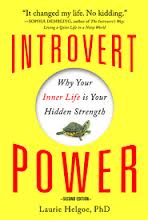
You don't go long in library world without the word introvert coming up in conversation. I don't know of any statistics on what percentage of librarians are introverts, but I imagine it would be more than those of the general population. But the good thing is that introversion isn't seen as a negative among librarians, perhaps because it's the norm. We embrace our introversion and are not ashamed of it. And that's because being introverted is not a bad thing at all, a fact which I've been reminded of in reading 'Introvert Power' by Laurie Helgoe.

She reminds us that at least half of Americans are introverts. Wow, really? Yep, she's done her homework. But we are still living in an extrovert's world where it is weird not to want to go to parties or be out on a Friday and Saturday night. The focus of Helgoe's book is first of all re-defining introversion in positive terms and then showing how introversion can be a strength rather than a weakness.

Did you know that introverts...

Get energy from quiet reflection and expend energy in social interaction

Are excited by ideas rather than people

Often have very rich imaginations

Don't like being put on the spot

May act extroverted, but tire quickly in social situations


I was thinking about the Future of Libraries talk where we were asked 'What is a Library?' and someone said it's a sanctuary. I have to agree. Public libraries have always been a place where time slows down. They are a place to be solitary if you choose, to let your imagination free in a book, and to get away from noise. I'd say the 50% of the population who are introverts really appreciate these qualities of a library. Whatever libraries become, I hope they will always be a sanctuary.

"Quiet people have the loudest minds" (Stephen Hawking)

Friday, July 19, 2013

The Future of the Library

I went along to the 2013 ALIA WA NAC Future of the Profession discussion with 68 keen others today and I'll attempt to give my account of it here.  The session was based on a discussion paper - found here. The current President of ALIA kicked off introducing the topic and explaining ALIAs concern about the future, then she introduced Kathryn Greenhill who is associate lecturer at Curtin University (I took her first year technology unit a few years ago). She zoomed through an outline of 10 trends she thought would impact on the librarian profession in the near future. Here they are (you can get more detail on each from #aliafutures in Twitter) and Kathryn's slideshow is available over on her blog, Librarian's Matter.

1. Open access.
2. Linked open data
3. Big data
4. APIs
5. The internet of things
6. Copyright, piracy and developing countries
7. Bypass and justify funding
8. Selling more than books
9. Service not stuff
10. Platform for information

In a future post (or many posts...) I will try to come to a deeper understanding of each of these. But anyway, the discussion then moved on as questions and comments from the audience were encouraged.  Here are some of the things that were discussed - I've taken them from #aliafutures on Twitter plus my own memory:


  • Is there anything that librarians can do that is unique? People without librarian degrees are being hired as librarians. Librarians are having to re-skill and learn continuously. Our roles are massively diversifying. If we take on new roles, we have to be able to do them better than others. Many can manage info and data better than us.
  • What to teach in library studies? Very hard to know. Lecturers encouraged to spend more time in libraries.
  • In many environments, libraries are subsumed into the larger organisation, especially in corporate libraries. Good thing or bad things? Librarians are unique in that we work across many different industries.
  • The public image of libraries and librarians has not kept pace with our image of ourselves. Our patrons have inaccurate ideas of what we do. Are people still visiting public libraries? Why or why not? We need to focus on services, not filling our buildings with stuff.
  • The point was made that the futures report contained nothing new - many are already doing the things mentioned in it. Need for further future / more innovative thinking.
  • Julie asked - what is a library? Big difference between the sectors - public emphasise space over content (e.g. exhibition and museum space, sanctuary for disadvantaged), corporate emphasised digital content over space, academic needs both.
  • How can we get everyone involved in professional development. It's important now more than ever. All of us need to be life-long learners. But does it come down to an individual's own mindset?
  • How can libraries use big data? We collect a lot of patron data - how about using it. E.g. "People who borrowed this also liked these books". How about selling our data? Using it for marketing?
  • If the library boat sinks, what useful skills do we need to remain afloat in the post-library world? Project management, data analysis, instructional design suggested
  • Problems of ebooks briefly re-hashed.
  • The future of academic libraries was discussed. Already moving into research support. Information literacy really changing from face-to-face to online tutorials, plus the embedded librarian, in the online learning platform, in class at time of need and in student forums. People like to discover for themselves. Short and smart is better. Potential for sharing tutorials rather than each academic library wasting time making their own? Maybe even vendors' tutorials are sufficient? Digital literacy is important too. Students who don't have digital literacy are at a massive disadvantage.
  • Librarians should try to add value - rather than just finding information there may be a role in critical analysis.

I think I got all the main points....

This is not a topic that will be going away anytime soon. In fact I think it will be a continuous feature of our careers as librarians. Stay tuned!